
A school talent show stage has a harder job than most stages. In a single evening it might host a solo singer, a street-dance crew, a comedy double act and a rock band — each needing a different amount of space, and each following the last with barely a minute to reset. The good news is that you do not need a big budget or a different stage for every act. You need one flexible stage, a sensible footprint, and a plan for changeovers. This guide covers what a talent show stage actually needs, how to reconfigure it between acts, and how to think about the budget so the stage keeps earning its keep long after show night.
What a Talent Show Stage Actually Needs
Enough Footprint for Solo and Group Acts
Start with the biggest act, not the average one. A solo singer or a magician needs very little — a small platform and room for a microphone stand. A dance group or a band needs depth as well as width, so nobody is performing on the edge.
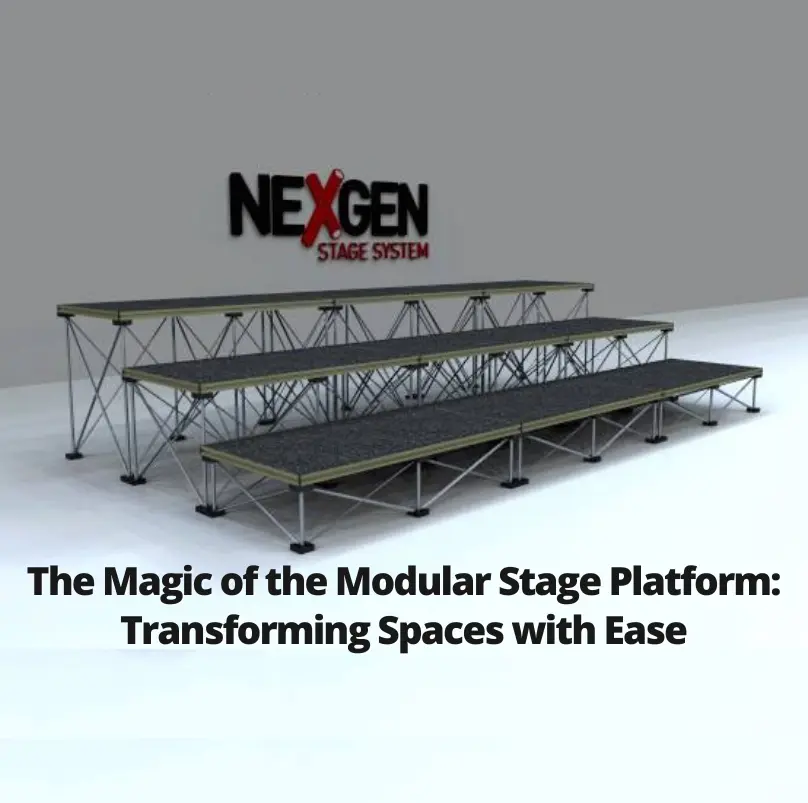
A 3x2m stage, built from six 1x1m decks, suits solo acts and small groups comfortably; a 4x2m layout gives a dance troupe or a band proper room to move. Because the stage is built deck by deck, you choose the footprint that fits your hall and your acts, rather than making the acts fit a fixed stage.
The same decks earn their place the rest of the year too — as a classroom stage platform for class performances, assemblies and presentations — which is exactly what a tight budget needs: one purchase, many jobs.
A Height the Back Row Can See Over
In a school hall, most of the audience is seated at floor level, so height is what puts performers in view. A 200mm stage lifts a singer clear of the front rows; 400mm gives dancers and bands a presence the back of the hall can appreciate.
Keep it sensible — this is a school show, not a festival main stage — and remember that younger performers are happier, and safer, at lower heights. Risers from 200mm up to 1000mm exist for tiered choir layouts and large halls, but most talent shows live happily at the lower end.
One Stage, Reconfigured Between Acts
The secret to a smooth talent show is the changeover. With decks that connect magnetically — no locks, no keys, no tools — staff and sixth-form helpers can resize or reshape the stage between acts in a couple of minutes.
Shrink it to a small platform for the solo guitarist, then add decks back for the dance finale. Mark each act’s layout on a simple running order taped to the wall backstage, and have the compère ready with two minutes of patter to cover every change.
Practise the changeovers at the dress rehearsal, with the same helpers who will do them on the night. A school talent show stage that changes shape calmly keeps the audience’s energy up and the running order on time — and it means one stage genuinely does serve every act on the bill.
Budget Thinking: Buy Once, Use It for Years
Start Small and Add Decks Over Time
A modular stage does not have to be bought all at once. Many schools start with a 3x2m portable staging package, use it for a year of assemblies and shows, then add decks as the PTA or the school budget allows — the new decks connect to the old ones, so the stage grows instead of being replaced. That spreads the cost across budget years and means the first purchase is never wasted.
Hiring Every Year vs Owning Your Stage
Hiring looks cheap for a single show, but the fees come back every year, for every event — the talent show, the nativity, the leavers’ ceremony, the summer concert. Owning the stage turns that repeating cost into a one-off, and the stage is there whenever you need it, not whenever a hire company has availability. Our guide to school stage cost works through the comparison in more detail. For most schools putting on more than a couple of events a year, buying once wins comfortably.
Simple Touches That Look Expensive
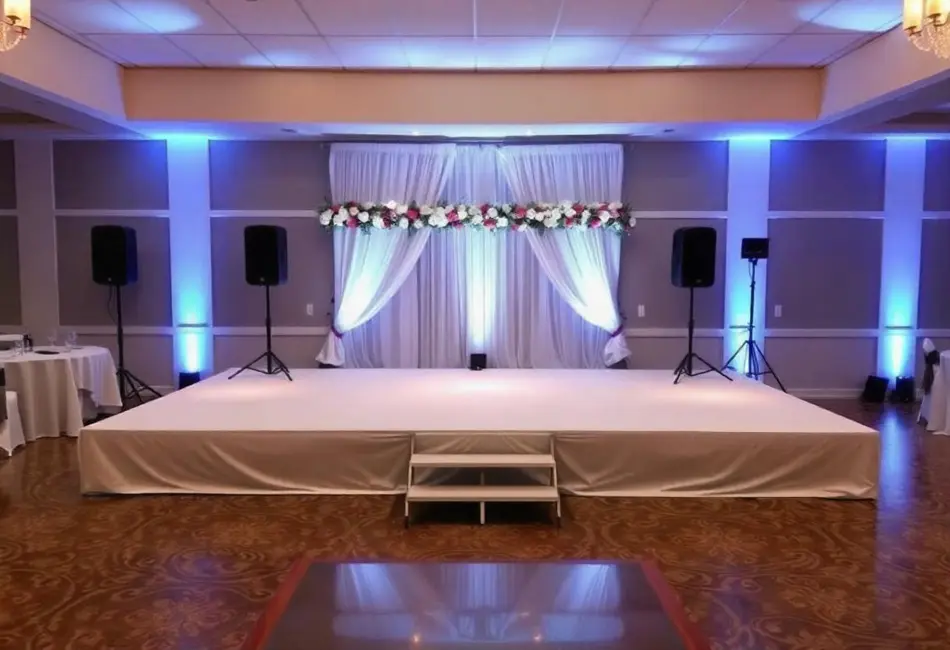
You do not need a lighting rig to make a school stage feel like show night. A plain backdrop behind the stage tidies away the hall’s noticeboards and gym equipment from the audience’s view and from every photo. The school name or a show banner across the backdrop adds instant occasion.
Use the hall’s lights warmly if you can, keep a simple spotlight or two on the performers if the school already owns them, and dress the front edge of the stage with the show’s colours. Small touches, consistently done, read as production values.
Safety Basics for Show Night
- Build the stage on a flat floor and check every deck is connected before doors open
- Keep heights sensible for the age of the performers
- Tape down or route away any cables crossing walkways
- Give performers a clear, supervised way on and off the stage
- Keep backstage areas adult-supervised during changeovers — no running with props
Talent Show Stage Checklist
- Footprint chosen for the biggest act, not the average one
- Height set so the back row of the audience can see
- Running order with each act’s layout taped up backstage
- Changeovers rehearsed with the actual helpers
- Backdrop and banner ready, cables taped, steps in place
NexGen portable staging is made in Sheffield and supplied to schools in and around Sheffield. If your school is local, one stage bought this year can carry your talent shows, nativities and concerts for years to come — one deck, one act, one show at a time.